

Employee Credit Card Debt: 4 Simple Ways To Help

Employee Credit Card Debt: 4 Simple Ways To Help

Employee credit card debt is a significant issue among American workers. The average American’s debt balance reached $6,380 as of Q3 2024, according to TransUnion. One in five credit card users are maxed out, and 8.8% of credit card debt transitioned into delinquency during the same period. Credit card debt has increased by 48% since 2021, largely caused by post-pandemic spending and inflation.

This financial burden weighs heavily on the mental health of your workforce. Nearly half of those struggling with employee credit card debt report sleep issues, anxiety, and even depression. These struggles can spill over into the workplace, hindering your team’s productivity. According to research published in the Journal of Business and Psychology, employees dealing with financial stress are 11 times more likely to report being less effective at work.

By offering the right support, you can empower your employees to regain control over their finances, improve their overall well-being and boost your team’s wellbeing. Here are four key ways to help them manage their employee credit card debt.
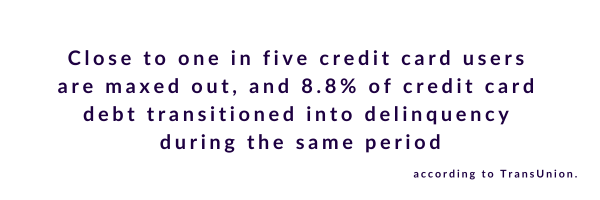
A stat about employee credit card debt

1. Educate workers on how to handle employee credit card debt

Financial literacy is essential for managing and reducing credit card debt. However, 90% of Americans are unaware of how credit cards even work, especially when it comes to negotiating terms and conditions. Filling this information gap is essential to reducing misspending. Research from InCharge Debt Solutions has shown that individuals with higher financial literacy are less likely to engage in costly behaviors, such as paying only the minimum balance or incurring late fees.

Employers can help bridge this gap by:

  • Offering comprehensive financial education services such as Best Money Moves
  • Hosting financial workshops on debt management
  • Teaching employees how to consolidate high-interest debt into lower-interest loans—an important step, considering the average U.S. credit card APR is 24.62%
  • Providing resources on how to negotiate lower rates with credit card providers.

A solid financial foundation can help your employees size up their credit card debt and then strategically approach repayment.

2. Encourage budgeting and emergency savings for those with credit card debt

Budgeting and emergency savings are critical for financial stability. Yet, according to NerdWallet, only 74% of Americans actively follow a budget. Employers can help fix this problem by fostering a culture that incentivizes financial planning.

By offering resources to help employees create a budget and stick to it, employers can help employees manage everyday expenses and prepare for emergencies. Investing in employee wellness can also boost team morale.

For employees struggling to save, automated payroll savings programs may help employees to store some of each paycheck in a dedicated account with minimal effort. Employees face less stress and greater stability when they take the time to build better financial habits. This benefits both their personal lives and workplace performance.

3. Consider employer-sponsored employee credit card debt assistance programs

Employer-sponsored debt assistance programs allow you to directly address employee credit card debt. These programs vary, but many offer direct contributions or match payments toward employee credit card debt. This helps to reduce their balances more quickly. Debt assistance programs are highly sought after. When surveyed by the Financial Health Network 62% of respondents reported that they would be more likely to stay at a job that offered useful debt-related benefits.

4. Offer flexible payroll options

Many employees struggle to make ends meet on a traditional biweekly pay schedule, particularly the 78% who live paycheck-to-paycheck. Flexible payroll options like earned wage access programs can offer relief for these employees by allowing them to access their earnings before payday in case of an emergency. This approach can help employees pay their bills on time, avoid late fees and reduce their reliance on credit cards for everyday expenses.

Not only can flexible pay options help your employees in a financial bind, but they also help employees feel more in control of their finances, reducing stress.

Supporting employees in managing credit card debt isn’t just a kind thing to do for your employees — it’s a smart move for your business. When employees have the tools to take back control of their finances, they’re less stressed, more focused and better equipped to do their job.

Help your employees with their credit card debt with Best Money Moves!

Best Money Moves is an AI-driven, mobile-first financial wellness solution designed to help employees with varying levels of financial knowledge dial down their most top-of-mind financial stresses. As an easy-to-use financial well-being solution, Best Money Moves offers comprehensive support toward any money-related goal, ranging from debt management to purchasing a home. With 1:1 money coaching, budgeting tools and other resources, our AI-driven platform is designed to help bolster employee financial wellbeing.

To learn more about Best Money Moves Financial Wellness Platform, let’s schedule a call. Contact us and we’ll reach out to you soon.

5 Easy Ways to Improve Employee Cybersecurity Around the Holidays

5 Easy Ways to Improve Employee Cybersecurity Around the Holidays

The holiday season is fast approaching. With it comes an increase in online shopping — which could mean an increase in cybercrime. Online sales are expected to grow by 4.8% this holiday season, according to Salesforce. Cybercriminals will look to exploit the surge in digital transactions. Employee cybersecurity should be a high priority for business owners. A data breach could result in the theft of customer information, financial losses and reputational damage.

All businesses are susceptible to cybercrime. But for companies with remote workforces, the holidays present an additional challenge to ensure employee cybersecurity remains strong.

As of August 2023, over 10% of all workers in the U.S. were entirely remote. An even larger percentage adopted hybrid schedules. This shift in work environments has created new vulnerabilities as remote workers are increasingly targeted by cybercriminals. According to a study by Barracuda Networks, 46% of businesses experienced a cybersecurity incident within the first two months of shifting to remote work.

With increased online shopping and the rise in remote work, business owners must help their employees avoid cybercrime. To protect your business during this high-risk time, here are five easy ways to improve your employees’ cybersecurity around the holidays.

1: Improve employee cybersecurity by educating employees on how to protect card data

When it comes to employee cybersecurity, knowing how scams work is half the battle. Online criminals often use a tactic known as phishing. Phishing scams use fraudulent websites, emails or text messages to steal credit card details or login credentials. According to the Federal Trade Commission, the most effective way to avoid falling victim to these scams is to recognize potential phishing attempts. You want to avoid suspicious links or attachments.

Encourage employees to only use trusted websites when making purchases. They should ensure that the site URLs begin with “https” for secure transactions. Never provide personal or financial information through text or email. Training seminars on recognizing phishing scams or even simple written guides on protecting payment information can help minimize the risk to both the employee and the company and support your employees’ cybersecurity.

2: Use spam filters and security software to avoid phishing scams

Phishing attempts increase during the holidays. This mirrors the uptick in online shopping. It’s critical to put proper tools in place to defend against cybercrime. Bolster employee cybersecurity by using spam filters and advanced security software. These help block malicious emails before they even reach your employees’ inboxes.

Phishing emails are designed to look legitimate, appearing as if they are from trusted sources like retailers or financial institutions. This can make them hard to spot. Spam filters and security software help remove and flag these before they enter your inbox. Train employees to recognize common phishing techniques, such as emails from generic domains like Gmail, Hotmail or Yahoo, that include urgent requests for sensitive information.

3: Advise your employees to use strong passwords and update them regularly.

The simplest way to protect your business from cyber threats is to enforce strong password policies for any important accounts. This strategy is also one of the most effective. Employee cybersecurity improves when employees are required to create complex passwords with at least twelve characters that include a mix of letters, numbers, and special characters.

Additionally, employees should avoid using the same passwords across multiple accounts, as one breach could leave them vulnerable to data leaks from multiple platforms. Updating these passwords regularly can help ensure the privacy of your accounts if they are ever compromised. Password managers can create, store and regularly update strong passwords for you.

4: Establish emergency response procedures in the event of an employee cybersecurity lapse

While it’s important to focus on prevention, these measures may not cover everything and businesses should be prepared to act quickly if a cybersecurity breach does occur to protect employee cybersecurity.

Establishing clear emergency response procedures can help ensure that employees know exactly what to do in the event of a data breach, malware infection or other cyberattack. This should include steps such as immediately disconnecting compromised devices from the company network, contacting your IT team and standardizing protocols for recovering data. According to IBM, creating formal incident responses helped reduce breach costs by half a million US dollars on average.

Employees should check if their device seems sluggish, if their battery is draining too quickly or if their device is making strange noises. All of these factors can indicate their device’s communications are being interfered with. Taking a proactive response by having employees report any suspicious activity, even if they think it’s minor, can help prevent some cybersecurity catastrophes before they spread.

5: Upgrade your employee cybersecurity by investing in cybersecurity tools

Investing in advanced cybersecurity tools such as cyber insurance or educational tools can give your business an extra layer of protection during the holidays. To help your employees’ cybersecurity, look for tools to prioritize security and help diagnose potential email threats. Another option to consider is cyber insurance, which can cover financial losses resulting from data breaches such as legal fees, notification expenses for affected customers, system repairs and even public relations efforts to manage reputational damage.

Cybercriminals are relentlessly innovative in their pursuit of company data as cybercrime costs the world over $10 trillion. The most practical way to avoid adding to that toll is by keeping your employees educated and responsible with their computer usage.