

5 Must Have Employee Benefits and Perks for 2022

5 Must Have Employee Benefits and Perks for 2022

5 must have employee benefits and perks for 2022. A new year means new opportunities to improve your benefits packages and offer more support to your team. Here are our top 5 picks for 2022.

2022 is right around the corner, and with it comes a new opportunity to update your benefits offerings to better serve your employees. 

Here are five benefits trends we’ve identified as must-haves for 2022:

1. Financial wellness programs.

Finances consistently rank as a top stressor for employees, but many employers remain unaware of the impacts of long-term financial stress. The reality is, prolonged financial stress can result in anxiety, depression and burnout for employees and can even contribute to higher turnover and decreased productivity. In a recent MetLife survey, 27 percent of employees said they are less productive at work because of financial worries, an increase from 23 percent just six months prior. 
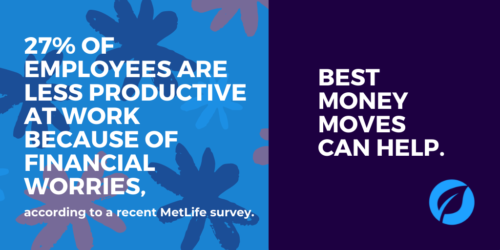
Financial wellness programs, like Best Money Moves, can help employees regain control of their finances. Best Money Moves has tools and features that help employees measure their financial stress, budget for monthly expenses, pay down debt and plan for emergencies. Employees can talk to trained professional financial counselors and educate themselves about everything from investing to co-signing loans to buying their first homes with access to a library of over 700 articles, videos and calculators.

2. Accessible paid leave.

In 2021, the White House introduced the American Families Plan, which includes a comprehensive parental, medical and family leave program. Regardless of whether the plan is passed, however, it indicates a real shift in how Americans are thinking about leave — 75 percent of voters said they would support a national paid family and medical leave policy that covers all workers.

While many employers are catching up to this trend, there’s still a real discrepancy in how many workers want the benefit and how many actually have access to it. According to the same MetLife survey, 80 percent of employees were interested in paid leave, but only 57 percent of their employers offered any kind of leave, paid or otherwise. 

3. Remote work flexibility.

The COVID-19 pandemic has undoubtedly changed the way we work, with many offices adapting to a hybrid strategy, a balance between working in person and working from home. For some, though, the option to work from home has become essential for various reasons, with nearly half of the employees in a recent PWC report responding that they would want to work remotely three days a week or more. 

And the research shows that offering more flexibility doesn’t equate to a loss in productivity — a survey tracking more than 30,000 workers found that 6 in 10 reported being more productive working from home than they expected.

4. Mental health support.

Feelings of burnout and depression are on the rise, and employees are looking to their employers to help. According to MetLife, 37 percent of employees polled felt stressed while working more than half the time. Another 34 percent felt burned out while working more than half the time and 22 percent felt depressed while working more than half the time — all major increases from the previous year. 

Burnout can lead to higher employee turnover, low productivity and increased absenteeism at work. Consider adding accessible mental health benefits to your health insurance plan and strive for an office culture that rewards employees who ask for help. These strategies can help combat this upward trend and help your workers both feel better and work better.

5. Help with student loan repayment.

Millennials, who make up the largest chunk of the current workforce, have more student loan debt than any other generation. As such, adding student loan repayment to your benefits packages can help you attract and retain employees. 

Plus, there’s more of an incentive than ever to consider this benefit in 2022: last year, Congress passed the Consolidated Appropriations Act, allowing employers to make tax-free contributions of up to $5,250 a year to their employees’ student debt, without the payments being included in the employees’ taxable income. This was originally included in the pandemic-related CARES Act but has been granted an extension through the end of 2025 with many hoping the change will become permanent. 

If you want to learn more about how Best Money Moves can bring financial wellness to your company, download our whitepapers.


4 Top Benefits Trends for 2022

4 Top Benefits Trends for 2022

4 top benefits trends for 2022. The pandemic has brought big changes to what employees need from their benefits programs. Here are 4 top trends to look for in 2022. 

The employee benefits needs of the post-pandemic workforce look very different than they have in the past. Employers need to take notice.

Seventy-three percent of Americans rank their finances as their number one source of stress, according to a 2021 CreditWise survey. Additionally, 75% of American employees say they have struggled with anxiety caused by COVID-19 and other world events while working from home.

4 of the top employee benefits trends to keep in mind for 2022

1. Personalized Benefits

Having a benefits package that is the same for every employee often leads to workers not fully understanding what they’ve enrolled in. Employers are trying to combat this in 2022 by shifting to personalized benefits. While satisfying your employees, personalized benefits also help employers by eliminating wasteful spending towards unused benefits. In the same Trends in Benefits survey, only 33% of employees felt that they understood the benefits options available to them and only 49% of employees said they can accurately recite which benefits they selected from the package their employer provided. 

Employers must keep up with the needs of their employees and choose their benefits based on that information. If your workforce consists of older and more financially stable workers, cater your benefits towards retirement and healthcare benefits. If your workforce has younger employees, choose benefits that aid in financial wellness as they have just started in the workforce and may be managing more-delicate finances. Instead of providing every employee with every benefit, employers can allow their workers to choose from a wide selection of benefits. The best way to figure out which benefits work best for your company is to simply survey your employees. Let your team choose the benefits package most relevant to

2. Increased flexibility/remote work

The second most requested benefit from last year was flexible work arrangements. While some workforces have been wary of flexible work solutions, allowing employees to work from home does not equate to a loss in productivity. In fact, a recent study by Mercer found that 94% of employers stated that work productivity was the same or higher since people shifted to remote work.  In addition, working from home saves employees an average of 40 minutes of commute a day, saves around $500 a month and 59% of people were more inclined to choose a job that allowed them to work from home. 

Allowing employees to work from home and have flexible schedules is another way for employers to prove they are listening to the needs of their employees.  In a recent PWC survey, over half of the employees surveyed responded that they would want to work remotely three days a week or more.  Workplace flexibility is not limited to remote work, but may also include allowing your employees to choose a daily and a weekly work schedule that best suits their needs and personal lives.

3. Mental health benefits

The pandemic has brought about a whole new way of working for many of those who previously worked in an office. Some have grown to prefer work-from-home setups and have left their jobs out of an aversion to returning to an office, Klotz, the researcher credited with the term “the great resignation,” previously said. 

To avoid losing employees over work environments, employers should aim to be flexible with their workers whenever possible. One solution could be to create a hybrid set up, which allows for a combination of remote and in-person work.

4. Financial wellness benefits

Money is the #1 cause of stress for employees and can lead to sleeping disorders, anxiety and depression.  Employees who are constantly worried about their finances are twice as likely to look for a different job and that stress costs employers 13-18% of annual salary. A great way for employers to refocus their employees on their work is by including financial wellness tools and training in their benefits packages. A recent survey by SHRM found that these programs not only focus workers, but improve their overall well-being, increase employee retention and can attract new hires. The most requested services by employees include retirement savings plans, emergency savings funds, safety net insurance and financial coaching.

Financial wellness programs, like Best Money Moves, can help employees regain control of their finances. 

Best Money Moves has tools and features that help employees measure their financial stress, budget for monthly expenses, pay down debt and plan for emergencies. Employees can talk to trained professional financial counselors and educate themselves about everything from investing to co-signing loans to buying their first homes with access to a library of over 700 articles, videos and calculators.

If you want to learn more about how Best Money Moves can bring financial wellness to your company, download our whitepapers.

4 Benefits to Help Boost Post-COVID Employee Retention

4 Benefits to Help Boost Post-COVID Employee Retention

4 benefits to help boost post-COVID employee retention. An employee mass-exodus could be coming to the post-COVID workforce. What can employers do to keep top talent? 

According to Microsoft’s 2021 Work Trend Index, 40 percent of the global workforce is considering leaving their employer this year. The mass employee exodus is due in no small part to a changing work landscape and increased employee burnout as a result of the COVID-19 pandemic.

Low employee retention rates cost organizations millions and put additional strain on team members who remain and have to pick up the slack. One solution to increase employee retention is to offer creative benefits that empower employees and make your company stand out from the rest of the job market. 

Here are four benefits to help your workforce boost post-COVID employee retention rates.

1. Increased vacation time and bonus with tenure

Most companies reward employees with higher bonuses and more vacation time the longer they stay with the company. To ensure this benefit structure incentivizes early employee retention, companies should have longer vacation time and higher bonuses kick in after just one year of employment.

2. Accessible commuting benefits

The COVID-19 pandemic introduced many employees to the benefits of a commute-free work day. No matter what form it takes, commuting adds stress and hours to the workday. Making it easier for your employees to get to and from work is a productive way to stand out amongst other employers. 

Commuting benefits can come in a variety of forms. Some, like public transportation and bicycle-share passes may cost employers up front, but they also signal to employees that their company values their time and money. Other benefits, like public transportation schedule dependent start and end times and company organized carpools, do not cost employers and still look after the wallets and schedules of employees.  

If your company can operate remotely, offering employees with long-commutes more remote-work days is also a great way to stand out in the employment market.

3. Physical and mental health wellness resources

Offering employees resources to improve their physical and mental health demonstrates care and prioritization for their wellness outside of the office. While not every company can afford an on-site gym, making room in your HR department’s benefits budget for resources like employee gym passes, access to virtual dietitians and motivational and mental health related speakers could go a long way.

4. Comprehensive financial wellness resources

According to a 2021 Capital One CreditWise survey, 73% of Americans rank their finances as the most significant source of stress in their life. Helping your employees manage their financial stress and reach their financial goals through a comprehensive financial wellness program is one way to help them combat this problem. 

Employers looking to increase employee retention must do more than just offer a 401-k and other retirement savings plans and offer employees the resources to empower them financially. Best Money Moves’ insightful, comprehensive, and easy-to-use platform can do just that.

Best Money Moves is a human-centered and individualized approach to financial wellbeing. The comprehensive and user-friendly platform provides a plethora of financial resources and educational tools. The library of resources contains over 700 articles, videos, and calculators. Each Best Money Moves user has their personal feed tailored to the several distinct factors that monitor their personal stress. 

Employee information is always private but employers do have access to key analytics that show overall employee financial stress and stress levels over time. The Employer Dashboard also features information on program usage, debt and savings levels and more so employers can see just how valuable Best Money Moves is to their employees.

If you want to learn more about how Best Money Moves can bring financial wellness to your company, download our whitepapers.

Support Workers with Better Employee Benefits in 2020

Support Workers with Better Employee Benefits in 2020

Support workers with better employee benefits in 2020. Targeting the four key aspects of employee wellness to build a better employee benefits package.

There are four key aspects to overall wellness: mental, physical, financial and social. Employees who score well across the board are more likely to be loyal, engaged and productive, according to the latest employee benefits research by MetLife.

“Now more than ever, it’s critical to understand employees’ needs,” said, Todd Katz executive vice president, Group Benefits, MetLife. “In this time of crisis and beyond, providing a mix of benefits and programs can help mitigate stress, improve employees’ holistic well-being and support them when they need it most – which in turn can help bolster engagement and loyalty from the workforce.”

Support Workers with Better Employee Benefits in 2020

The coronavirus pandemic continues to reshape the working world challenging businesses everywhere to adapt to the new normal. Strategizing how employee benefits can better support workers in a time of crisis is a must. 

This year, MetLife’s 18th annual U.S. Employee Benefits Trends Report considers how resilient employees are when faced with uncertainty and then looks at the important role employee benefits plays in the overall wellness of workers, identifying the perks and programs that matter most.

Financial Wellness Programs

More than half of U.S. employees told MetLife their biggest concern in the wake of the novel coronavirus is their financial health. According to a survey by Freedom Debt Relief:

  • 41 percent of employees are worried about being able to afford to feed themselves and their families.
  • 41 percent report are struggling to make their rent or mortgage payments.
  • 37 percent will miss payments on some bills in the next six months. 
  • 35 percent will use credit cards to pay for groceries.

Over 60 percent of employees say the $1,200 pandemic relief check they received as a part of the CARES Act will not be enough to get through the current economy.

“The coronavirus is clearly contributing to employees’ overall stress, especially as it relates to their financial well-being,” said Katz. “It should come as no surprise that this is particularly true among those with incomes below $50,000, and those in healthcare. Across industries, employers have an opportunity to be a source of support for employees facing unprecedented challenges by offering tools and resources to address their immediate concerns.”

Nearly 80 percent of workers with access to financial wellness programs told MetLife they’re satisfied with the employee benefits their employer offers. 

The best financial wellness programs, like Best Money Moves, are gamified and harness machine learning to guide employees to the resources they need most. If you want to learn more about how Best Money Moves can bring financial wellness to your company download our whitepapers and sign up for a demonstration here.

Mental Health Benefits

Close to 60 percent of employees struggling with mental health said their employer doesn’t offer mental health programs that meet their needs, or that the programs they do offer are too difficult to access or understand. Effective mental health programs can help ease stress, anxiety and depression that can fuel burnout and disengagement at work. 

Flexibility 

There was a trend towards flexible work arrangements long before the coronavirus pandemic began. Now, flexibility has shifted from being a highly sought after perk to a crucial necessity to maintain operations and accommodate workers. 

Assigning reasonable workloads, offering flexible work hours or arrangements and providing sufficient time to address personal needs can mitigate stress, burnout and depression. At the same time, MetLife finds these practices are also top drivers of productivity, engagement and loyalty. 

Over 80 percent of employees believe their employers have a responsibility to address their health and well-being. Employers can leverage the right mix of benefits, perks and programs to better support employees and in turn boost engagement, job satisfaction and retention.

More on Topics Related to Support Workers with Better Employee Benefits in 2020

Returning to Work After COVID-19

How Financial Stress Impacts Job Performance

Coronavirus 2020: Effectively Working from Home

Helping Employees During Coronavirus/COVID-19 Pandemic

How Will the Coronavirus Impact Your Business?

Choosing the Most Important Benefits to Employees in 2020

Choosing the Most Important Benefits to Employees in 2020

Choosing the most important benefits to employees in 2020. Increase employee benefits participation and engagement with our three-step strategy.

Best Money Moves recently forecast the top 10 employee benefits for 2020 and we’ve developed a simple, three-step strategy to help you identify the benefits your employees want most and formulate a communications plan to increase participation and engagement.

How to Choose the Most Important Benefits to Employees in 2020

Step #1 Audit Your Current Employee Benefits 

Conduct an audit of your current employee benefits package. You’ll want to know which benefits are used most frequently and which benefits are underutilized. If there isn’t an annual report for benefits utilization, work with HR to create a process for it going forward. Historical data comes in handy whenever you’re making benefits decisions.

If a benefit is underutilized, it doesn’t necessarily mean that benefit should be scrapped. Nearly half of employees don’t understand all the benefits their organization offers. The next step helps you determine whether it’s a benefit that employees don’t value a benefit that needs to be restrategized.

Step #2 Survey Employees and HR

A short employee survey gives you insight into what benefits are the most important benefits to employees in 2020. Make sure to include questions about benefits that appear to be undervalued and benefits you’re thinking of introducing. Multiple-choice questions quickly determine which benefits are most sought after, and, if you include open-ended questions, they’ll tell you why those benefits matter most.

While you’re at it, survey your human resources team. What questions do they get about benefits? Are there any benefits employees have asked about that the organization doesn’t offer? What do they think about the current benefits engagement process? Is there any way they think benefits communication can be improved? How? Including HR in the planning process gives you a better understanding of how benefits are managed day-to-day and where improvements can be made.

How to Increase Employee Benefits Participation and Engagement

Step #3 Improve Benefits Communication

Employee benefits participation and engagement comes down to one thing: communication. Traditional meetings or emails that give employees large amounts of information are no longer an effective way to educate employees. Shorter, bite-sized benefits information sent over a longer period of time is a better way to improve employee understanding.

“Releasing “bite-sized” bits of information on different benefits every quarter could vastly improve employees’ understanding of benefits selection and enrollment,” said Misty Guinn, director of benefits and wellness at cloud-based benefits platform provider Benefitfocus.

This does mean more work for HR, but the good news is that most of it can be automated with minimal updates once templates are written. Test different methods of communication, like text messaging, phone calls and instant messenger in addition to emails or meetings. Track participation, open and click rates to see which method is the best way to reach your employees.

Employee benefits and perks are the battlegrounds where employers are fighting the war for talent in a tight job market where unemployment hovers at a nearly 50-year low (3.7%). Moreover, employee benefits account for more than 30 percent of total employee compensation. It’s worth developing a better benefits process and improved engagement strategies to make sure your organization offers the most important benefits to employees in 2020.

More on the Most Important Benefits to Employees in 2020:

Top 10 Employee Benefits for 2020

4 Big Employee Benefits Trends for Family Planning

Financial Wellbeing and Its Role in a Complete Employee Wellbeing Program

5 Must-Have Benefits for Millennial Employees

Top 10 Workplace Etiquette Rules for Communication

Hiring Trends to Watch in 2020

How to Support Mental Health at Work