Holistic Wellness: 4 Benefits for a Better Plan

Holistic Wellness: 4 Benefits for a Better Plan

Holistic wellness is gaining traction as companies recognize the value of supporting employees across multiple dimensions of well-being.

A holistic wellness plan extends beyond traditional benefits. It focuses on a comprehensive approach to the physical, mental, financial and social aspects of an employee’s life. It aims to create a healthier, more engaged workforce by addressing employees’ evolving needs.

However, many employees feel their current benefits don’t meet their day-to-day needs, according to a 2024 Wellbeing and Voluntary Benefits Survey from HR consulting Firm Buck. Only 40% believe their company effectively supports their overall well-being and another 63% of employees said they would consider switching jobs for better benefits.

A thoroughly considered, holistic benefits plan may be the missing link to filling these gaps. The right holistic benefits not only help employers attract and retain talent but also foster a more productive and engaged workforce.

4 Holistic Benefits For A Better Plan

When employees face health challenges, the resulting stress impacts their well-being, performance, engagement and job satisfaction. A holistic wellness plan can address these diverse challenges, improving workplace culture, encouraging engagement and boosting productivity.

A successful holistic wellness plan should integrate benefits that cater to various facets of employees’ well-being. Here are four core areas to consider:

1. Mental Wellness

Mental health is increasingly recognized as a critical component of employee well-being. McKinsey reports that nearly 60% of employees face daily mental health challenges, directly affecting their work performance.

To address this, companies can offer mindfulness programs that help employees manage stress and improve focus. Peer-to-peer counseling and healthcare access also create support networks within the workplace, offering employees a safe space to connect and seek help. Companies have also turned to volunteer initiatives, shown to improve mental health by providing a sense of purpose, boosting happiness and increasing productivity. By providing stress management workshops and coaching apps, companies can provide employees with resources to handle stress at their own pace.

2. Physical Wellness

Supporting employees’ physical health can significantly enhance productivity and reduce workplace stress. Exercise programs and nutritional challenges are commonly used to encourage employee health. These programs have been shown to lead to healthier food choices and have been linked to reductions in stress, anxiety and depression. Companies can also incorporate sleep education into their wellness programs. Nearly 75% of employees get less than the recommended seven hours of sleep per night, according to data from Glassdoor. By promoting physical health, companies can contribute to better mental well-being, energy levels and focus.

3. Financial Wellness

Financial stress is a significant burden for many employees. Recent data from Bank of America reveals around 26% of U.S. households report living paycheck-to-paycheck. Financial wellness programs can help ease these concerns and provide long-term security for employees.

Financial coaching and savings programs can help employees better manage their current finances while also planning for the future, helping to reduce day-to-day financial stress. Programs like auto enrollment into 401(k) plans, starting with an 8-10% contribution rate and auto-escalating annually can start employees on a secure path toward retirement saving. Offering benefits such as tuition reimbursement and life insurance subsidies can be especially helpful for working parents. With a multigenerational workforce, it is ever-important to tailor financial wellness programs to the needs of employees at various life stages.

4. Social Wellness

Social connection in the workplace is more important than ever, especially with the rise of remote and hybrid work environments. According to Harvard Business Review, employees with a strong sense of community at work are nearly 60% more likely to thrive in their roles. Maintaining employees’ social wellness is a crucial aspect of maintaining holistic wellness. Even remotely, team-building activities, company-wide events and peer challenges can help employees build camaraderie and strengthen relationships with one another. Recognizing employees’ accomplishments and celebrating milestones in peer shout-outs also creates a sense of belonging and motivation in the workplace. Even in virtual settings, promoting social interaction can help employers create a positive and inclusive workplace culture.

A holistic wellness plan offers employees much-needed support in various areas of their lives — mental, physical, financial and social. By implementing such a plan, companies can not only boost productivity and engagement but also attract and retain top talent in today’s competitive job market.

Round out your holistic benefits plan with financial wellness from Best Money Moves.

Best Money Moves is an AI-driven, mobile-first financial wellness solution designed to help employees with varying levels of financial knowledge dial down their most top-of-mind financial stresses. As an easy-to-use financial well-being solution, Best Money Moves offers comprehensive support toward any money-related goal, ranging from debt management to purchasing a home. With 1:1 money coaching, budgeting tools and other resources, our AI-driven platform is designed to help bolster employee financial wellbeing.

To learn more about Best Money Moves Financial Wellness Platform, let’s schedule a call. Contact us and we’ll reach out to you soon.


Money Dysmorphia: A Simple Guide to Why it Matters

Money Dysmorphia: A Simple Guide to Why it Matters

Money Dysmorphia: A Simple Guide to Why it Matters. Financial wellness programs help combat Money Dysmorphia, with tools to empower employees and help them develop a more accurate view of their financial life.

According to Credit Karma, almost half of Gen Z struggle with Money Dysmorphia –  the feeling of being financially “behind.” This may also be triggered by negative experiences with money, like extreme poverty or debt. Money Dysmorphia causes preventable stress, which can affect workplace productivity, retention and quality of life. Employees who overcome this are able to feel more in control of their daily finances. Take advantage of financial wellness programs to support your employees and prevent the effects of Money Dysmorphia.

Looking for a financial wellness solution? Try Best Money Moves.

Best Money Moves is a financial wellness benefit that helps employees make smarter choices about their money. Best Money Moves users gain access to a suite of debt trackers, budgeting calculators and a library of 900+ articles, videos and webinars. Our tools empower employees with actionable solutions to real-world problems. Best Money Moves users also receive exclusive member deals from our library of trusted benefits partners, including discounts on insurance, college planning prescription medications and so much more.

Schedule a call with a member of our team to learn more about Best Money Moves. Contact us and we’ll reach out to you soon.

Financial Burnout in 2025: How to Address Employee Concerns

Financial Burnout in 2025: How to Address Employee Concerns

Financial Burnout in 2025: How to Address Employee Concerns. Financial burnout is affecting employees of all generations. Learn the ins and outs of this issue, including ways to improve your workforce’s wellbeing.

There’s a new term to describe how employees feel about money: Financial burnout, a condition marked by prolonged financial pressure that results in mental exhaustion and physical strain.

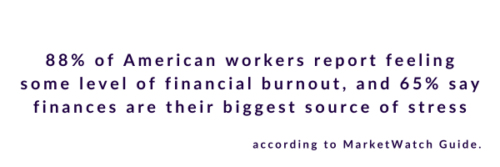
Eighty-eight percent of American workers report feeling some level of financial burnout, and 65% say finances are their biggest source of stress, according to a recent survey by MarketWatch Guide. Another 41% of employees say their finances have “destroyed” their mental health, and 64% reported feeling “financial fatigue,” when dealing with money.

Like other types of burnout, financial strain affects more than mental wellbeing. Respondents also report symptoms such as loss of sleep (56%), physical fatigue (47%), headaches (45%), weight gain or loss (38%), changes in appetite (34%) and digestive issues (33%).

It’s clear that financial burnout is taking a significant toll on the overall health of American employees, yet many workplaces still struggle with how to effectively curb the issue. Here are the key factors driving this issue and actionable steps employers can take to provide support.

Healthcare costs and employee financial burnout

Many workers face especially high anxiety over healthcare costs. According to the 2023-2024 Aflac WorkForces Report, 50% of workers report anxiety about out-of-pocket health care expenses, even beyond what insurance covers. Furthermore, 51% of employees would need to dip into their savings or checking accounts for unexpected medical bills. Younger generations are particularly vulnerable, with 72% unable to afford $1,000 in out-of-pocket healthcare costs.

Employers can help by offering more comprehensive health plans that minimize out-of-pocket costs from the start. Employees can further prepare for unexpected medical expenses and diagnoses by partnering with financial planning services that guide saving for medical emergencies. Encourage employees to set aside income to cover future medical costs through pre-tax income programs such as health savings accounts.

The gap between perception and reality

There is also a gap between employer and employee perceptions of healthcare. While 79% of employers think their teams understand healthcare costs, only 48% of employees agree. Furthermore, 41% of employees would be unsure of where to seek support after a serious medical diagnosis.

Employees can provide support by offering financial literacy programs like workshops or tools to help employees better understand the costs of healthcare and other essentials. Employers can also establish a fund to support employees facing financial hardships due to unexpected events.

How poor habits can intensify financial stress

However, it is not just limited access to resources that causes financial burnout. Employees’ financial habits may also exacerbate already existing issues. Poor budgeting, overspending and procrastination are common issues leading to financial burnout when employees avoid dealing with their financial challenges until it is too late.

According to MarketWatch Guide, 58% of employees don’t use a detailed financial budget. 57% procrastinate on important financial decisions, 44% overspend to deal with stress, 44% make purchases they cannot afford and 41% avoid opening bills or reviving card statements. 44% also admitted they ignore a financial problem until it becomes a crisis.

Employers can partner with financial institutions to offer debt consolidation services or low-interest loans for employees struggling with debt. Providing access to budgeting apps or financial planners can also encourage employees to create and adhere to a financial plan. Organizing employee challenges that reward participation in financial planning and debt-reduction programs can also help employees reach their financial goals.

Financial burnout affects the mental, physical and financial health of employees nationwide. Employers can play a crucial role in mitigating this stress by offering comprehensive healthcare benefits, financial literacy programs and resources to support better budgeting and debt management. By taking proactive steps, organizations can both improve the well-being of their teams and foster a more productive workforce.

Tackle financial burnout head-on with direct help from Best Money Moves.

Best Money Moves is an AI-driven, mobile-first financial wellness solution designed to help employees with varying levels of financial knowledge dial down their most top-of-mind financial stresses. As an easy-to-use financial well-being solution, Best Money Moves offers comprehensive support toward any money-related goal, ranging from debt management to purchasing a home. With 1:1 money coaching, budgeting tools and other resources, our AI-driven platform is designed to help bolster employee financial wellbeing.

To learn more about Best Money Moves Financial Wellness Platform, let’s schedule a call. Contact us and we’ll reach out to you soon.
How to Use Benefits to Stand Out to Top Talent

How to Use Benefits to Stand Out to Top Talent

How to use benefits to stand out to top talent. Companies need a competitive benefits package to attract and retain top talent. Here are the standout benefits your employees are looking for.

Offering a good salary isn’t enough to attract cream of the crop employees — top talent want an employer that’s invested in their development and wellbeing, both professionally and personally.

People are critical to a company’s success, so having a strong talent acquisition strategy is key in today’s competitive job market.
Learn how employers of choice are going beyond competitive pay to attract top talent, and ultimately retain top employees.
Companies, regardless of industry and size, struggled with full-time hiring in 2024 — better benefits can boost talent acquisition efforts.

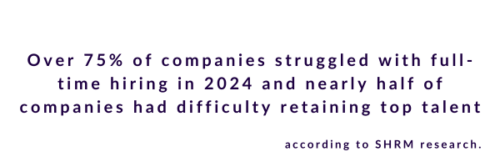
According to research by the Society for Human Resource Management (SHRM), over 3 in 4 companies struggled with full-time hiring in 2024 and nearly 1 in 2 companies have difficulty retaining top talent. This is because top talent are increasingly shopping around for an employer that values their wellbeing, even if that means leaving their current employer.

SHRM’s research also found that regardless of industry or size, recruiting top talent remains a key business issue for all companies.

On the other hand, companies that had success with recruiting in 2024 often cite their strong benefits package as a success factor, according to SHRM. Having a competitive benefits package doesn’t only help get top talent in the door — in the long term, unique value-driven benefits can help retain talented employees.

3 Standout Benefits to Help Attract & Retain Top Talent Employees

1. Tuition support for employees and their family

The cost of attending college and other education programs has skyrocketed in recent decades. As a result, cost has become a large barrier to education for many, but it doesn’t have to be this way.

To support employees’ self-development and improvement, companies are increasingly investing in tuition assistance programs. For instance, some employers of choice offer up to 100% tuition reimbursement for educational self-improvement, including professional training and degree-seeking programs.

Even if the employee themselves isn’t interested in tuition assistance, at some companies this benefit can be leveraged to support the educational costs of an employee’s spouse and children.

2. Flexible work models (hybrid, remote)

Although many companies are shifting back in-office, hybrid work models are here to stay.

Many employees value having the opportunity to work remotely, whether full-time or several days a week. This is because flexible work models can help support employees’ work-life balance, while also creating a more inclusive work environment.

Flexible work models allow all employees to participate in the workforce — including parents, caregivers, and people living with disabilities.

Without hybrid/remote work, almost 40% of mothers say they’d need to decrease their work hours or leave their jobs entirely to meet their caregiver duties, according to research by McKinsey & Co.
In sum, hybrid work may seem like a simple offering, but it’s an impactful benefit that can go a long way for top potential employees.

3. Financial wellness & money management resources

A key step in creating a resilient workforce is meeting your employees’ most top-of-mind worries — and oftentimes, a leading stressor employees face is related to money.

Over 50% of employees say that they’re financially stressed, according to PwC’s 2024 Global Workforce Hopes & Worries survey. Prolonged financial stress can impact employees’ ability to focus and perform their best, which can ultimately lead to lower productivity.

To help employees dial down their money worries, employers of choice have increasingly invested in financial wellness benefits and resources.

Whether it be 1:1 financial advising or personalized savings programs, offering money management benefits can help employers demonstrate to future employees their commitment to all aspects of employee wellbeing, including financial wellness.

Offer top benefits to attract top talent with help from Best Money Moves.

Best Money Moves is an AI-driven, mobile-first financial wellness solution designed to help employees with varying levels of financial knowledge dial down their most top-of-mind financial stresses. As an easy-to-use financial well-being solution, Best Money Moves offers comprehensive support toward any money-related goal, ranginging from debt management to purchasing a home. With 1:1 money coaching, budgeting tools and other resources, our AI-driven platform is designed to help bolster employee financial wellbeing.

To learn more about Best Money Moves Financial Wellness Platform, let’s schedule a call. Contact us and we’ll reach out to you soon.

Here Are The 4 Important Insurance Terms Gen Z Employees Need To Know

Here Are The 4 Important Insurance Terms Gen Z Employees Need To Know

The 4 Important Insurance Terms Gen Z Employees Need To Know. Gen Z employees often struggle to understand common insurance terms. Learn about how employers can help with financial wellness benefits.

Insurance is a complex topic, no matter how experienced you are. However, Gen Z employees are suffering from a lack of knowledge of insurance terms and policies. In fact, only about a quarter of Gen Z adults could define the terms “deductible” (27%) and “copay” (29%) when surveyed National Association of Insurance Commissioners (NAIC). Around 35% said they could define “out of pocket.” Just 19% said they understood the term “out-of-network.”

Engaging with insurance is key to developing a strong sense of financial security. You can accrue significant savings from the right health, auto or renters policy. This may prevent many Americans from taking on crippling debt.

Here are the top insurance terms your Gen Z employees should know and why they matter.

The Top Insurance Terms Your Gen Z Employees Should Know

Open Enrollment is when employees can sign up for, adjust or change their health insurance policies. It is vital for employees to understand when this period starts and ends, in order to be prepared if they (or someone in their family) get sick. Reviewing their plan may also expand their ability to receive prescription drugs and specialized care for certain illnesses.

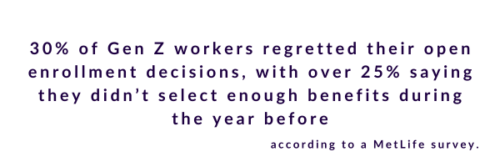
A MetLife survey found that 30% of Gen Z workers regretted their open enrollment decisions. Over 25% said they didn’t select enough benefits during the year before. In fact, nearly half of Gen Zers said they waited too long before choosing benefits. 53% said they didn’t even understand what was being offered.

A deductible is the amount of money an individual pays (per year or per condition) before insurance companies begin covering any expenses. A copay is a similar fixed payment that occurs each time an individual sees a doctor. A premium represents the actual cost of an insurance plan, dictating the amount a person pays to keep their plan active.

According to WorkLife, only 60% of Gen Zers understand these three insurance terms and can explain how they relate to their coverage. Confusion surrounding insurance often causes people to turn to unreliable sources for help, which can lead to uninformed decisions. Defining insurance terms helps employees to make the most out of their healthcare benefits.

Financial education bridges the information gap

In order to support your younger employees, insurance education must be transparent and personalized to each individual. To ensure your employees understand their insurance policies, include financial wellness into your benefits program.

A financial wellness program offers educational resources that gives your team the best chance to succeed. Their pressing questions about insurance, open enrollment and other guidance are packaged into simple, easy-to-understand articles and videos.

It’s clear that financial education, especially surrounding insurance, is vital for your employees’ success. Whether your workforce is fresh out of college or preparing for retirement, the help they need is readily available if your focus targets their financial wellness needs.

Best Money Moves is a mobile-first financial wellness solution designed to help dial down employees’ most top-of-mind financial stresses. As an easy-to-use financial well-being solution, Best Money Moves offers comprehensive support toward any money-related goal. With 1:1 money coaching, budgeting tools and other resources, our AI platform is designed to help improve employee financial well-being.

Whether it be retirement planning or securing a mortgage, Best Money Moves can guide employees through the most difficult financial times and topics. We have robust benefits options for employers, regardless of their benefits budget.

Our dedicated resources, partner offerings and 1000+ article library make Best Money Moves a leading benefit in bettering employee financial wellness.

To learn more about Best Money Moves Financial Wellness Platform, let’s schedule a call. Contact us and we’ll reach out to you soon.