5 Benefits to Help Employees Cope with Inflation

5 Benefits to Help Employees Cope with Inflation

5 benefits to help employees cope with inflation. Inflation is the highest it’s been in years. Here’s how employers can support their teams cope with inflation with the right benefits choices. 

As inflation skyrockets, the effects are felt throughout the US workforce. According to BenefitsPro, 82% of HR executives are concerned that their employees’ personal finance issues affect workplace productivity. 

Luckily, there are methods employers can use to help employees weather this period. Here are 5 benefits employers can use to help employees cope with inflation.

1. Improved Retirement Benefits

Increased inflation is straining “rainy day funds” and other savings for employees. According to the AARP, 39% of employees have nothing saved for emergencies and 20% have nothing in their retirement accounts. A few great ways for employers to assist employees are auto-enrolled retirement plans and increasing 401(k) contributions. Improving retirement benefits can also be a great way for employers to keep up with the competition in their industry. According to SHRM, 16% of large and midsize US employers plan to raise 401(k) contributions or reinstate a contribution match for 2022.

2. Health Care Assistance

A strategy for employers to signal to employees that their needs are being cared for is by increasing health care benefits. This assistance can come in many forms such as covering the cost of health insurance or assisted savings programs. Health care costs can often drag behind increases in consumer prices, so employees may face an increase in costs that will last throughout this year and next.

According to the Kaiser Family Foundation, 46% of employees reported that they have less than $1,000 in out-of-pocket costs for any unexpected hospital/doctor visit. Assisting with health care can also help alleviate mental health problems amongst workers. According to AFLAC, about half of all employees report having anxiety about covering the cost of healthcare beyond what their insurance covers.

3. Student Loan Repayment Assistance

Repaying the student loans that employees are indebted to is a great way to repay the workers for the investment they made in higher education. The government has tried to encourage businesses to implement these programs in their benefits packages. In 2020, employers that offered student loan repayment assistance doubled from 4 to 8%. However, in a survey by SHRM, 41% of young adult employees placed student loan assistance in their top 3 benefit choices.

4. Financial Planning and Coaching

Financial Planning and Coaching benefits showcase a gap between employer benefits and what employees want. According to BenefitsPro, only 35% of employers offer financial planning and 24% offer financial coaching while 60% of employees want personalized financial planning and 54% of employees want personalized financial coaching. Utilizing a service like Best Money Moves makes it easy for employees to find custom solutions to each employee’s problems.

5. Comprehensive Financial Benefit Packages

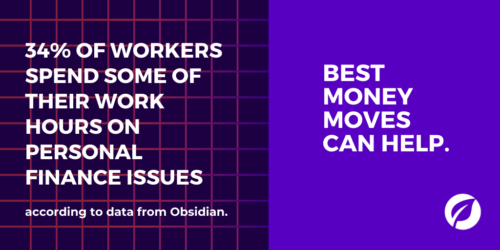
The best way to address the evolving personal finance needs of employees is by providing financial wellness benefits that can address a wide range of issues. According to Obsidian, 34% of workers spend some of their work hours on personal finances. Working in close communication with workers about what plan works best for them makes it easy to have a healthy workplace and can increase productivity. Best Money Moves is a platform that provides many of the solutions that employees are searching for.
Help employees cope with inflation with financial wellness solutions from Best Money Moves.

If you’re looking for a first-in-class financial wellness solution, Best Money Moves could be the answer you need. Best Money Moves is a financial wellness program that provides all the guidance and support employees need to help them reduce their financial stress. It has tools and features that help employees measure their financial stress, budget for monthly expenses, pay down debt and plan for emergencies.

Employees can talk to trained professional financial counselors and educate themselves about everything from investing to co-signing loans and buying their first homes with access to a library of over 700 articles, videos and calculators. 

Best Money Moves is also gamified, featuring a point-based rewards system where users earn points every time they log in, enter their information into their profile, work with their budgets, read articles and measure their stress. Each point translates into a chance to win a monthly contest.

Employers want a financial wellness program that is expansive, engaging and suited to meet each of their employee’s unique needs and they’ve found it in Best Money Moves.

To learn more about Best Money Moves Financial Wellness Platform, let’s schedule a call. Contact us and we’ll reach out to you soon.

5 Benefits for Employers to Retain and Attract Top Talent

5 Benefits for Employers to Retain and Attract Top Talent

5 benefits for employers to retain and attract top talent. High turnover creates an expensive problem for employers and stressful environment for employees. Retain and attract top talent with these 5 standout benefits.

The cost of replacing an employee can range anywhere from six to nine months’ salary, according to data from SHRM. If your team is worried about the cost of losing talent, it could be time to reevaluate your benefits strategy. According to a survey by ArmadaCare, 78% of employees are more willing to stay with their employer due to their employee benefits. 

Here are the 5 best benefits to help retain and attract top talent.

1. Offer competitive, matched retirement planning options.

Retirement planning is one of the most common employee benefits offered by employers, specifically a 401(k) matching plan. According to a study by SHRM and Morgan Stanley, the most important financial wellness benefit for employees was retirement planning. The additional financial security that employees feel when their retirement needs are taken care of can help reduce stress and improve office morale.  For these programs, employers don’t only receive the benefit of being more attractive to potential new hires, they can also receive tax benefits for contributing to employees’ retirement accounts.

2. Support top talent with emergency fund assistance.

One of the lingering effects of the pandemic is the reduced amount of “rainy day funds” available to employees. According to a survey by PWC, 38% of employees have less than $1,000 stowed away for emergencies. Employer-sponsered emergency savings accounts may be funded similarly to 401(k) accounts. However, the money added to the accounts does not have to stay in the account long-term and the cash taken from employee’s paychecks is taxed as income.

3. Allow flexible time-off policies.

According to a survey by JustWorks, 68% of employees felt as if flexible hours had a positive impact on their team. And, according to another survey conducted by SHRM, 80% of employees said they would be more loyal to their company if they had flexible work options.

Employees have put a high value on flexible schedules and the loss of productivity is often more than worth providing the option than having to replace employees. According to that same survey by JustWorks, 76% of employers felt that flexible hours had a big impact on their ability to attract new talent. Also, flexible schedules do not necessarily result in a lack of productivity. According to SHRM, about ⅔ of employees said they are more productive working outside of a traditional work environment.

4. Invest in top talent with employee loan assistance programs.

One of the hottest new trends in employee benefits is student loan repayments. It can be a huge bonus in attracting younger talent to a company. Assistance programs go far beyond loan repayments. Many companies offer purchasing programs that assist employees in making larger purchases such as a new computer. Employee assistance programs can go outside of directly benefitting the employee as many offer aid to immediate family members of employees or anyone living with an employee.

5. Offer your top talent personalized financial coaching.

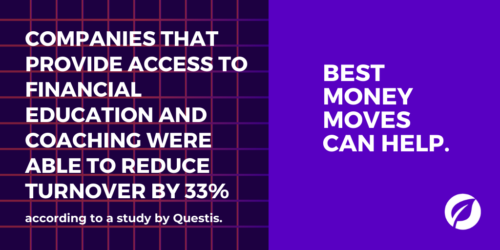
Offering the service of financial coaches adds a personal touch to the offered benefits and lets employees know that their specific needs are met. 43% of employers offer “personalized financial counseling, coaching or planning and an additional 35% are considering adding the service to their benefits according to research by the Employee Benefit Research Institute in partnership with Mercer. According to a study by Questis, companies that welcome financial empowerment through employee benefit programs and provided access to personal finance education and coaching were able to reduce turnover by 33%.

Attract and retain top talent with financial wellness solutions from Best Money Moves.

Best Money Moves can help your employees address their financial stress and improve your retention in the new year. The program uses artificial intelligence to power a mobile-first platform that measures employee financial stress, then dials it down with a unique content-mapping system that helps solve your employees’ pain points. Our triggers and alerts system, as well as budgeting tools, personal finance resources and more, help guide employees to make smarter financial decisions and reduce their overall stress.

To learn more about Best Money Moves Financial Wellness Platform, let’s schedule a call. Contact us and we’ll reach out to you soon.

5 Benefits to Include In Your Employee Retention Strategy

5 Benefits to Include In Your Employee Retention Strategy

5 benefits to include in your employee retention strategy. The Great Resignation isn’t over yet. Up your employee retention strategy and keep your team where they belong with these five benefits. 

Nearly 4.4 million Americans quit their jobs in February of 2022, according to the U.S. Department of Labor. These numbers suggest that the period of record employee turnover known as the “Great Resignation” is not slowing down. 

The costs to employers are staggering. It costs six to nine months of an employee’s salary to hire and acclimate their replacement, according to data from SHRM. It also takes a new employee 1 to 2 years to reach the level of productivity of an existing employee. 

To help avoid the high costs of turnover, employers should be prepared to reevaluate their benefits packages. Here are 5 benefits to include in your employee retention strategy.

1. Boost employee retention with personalized financial wellness benefits.

Around 87% percent of employees want help when it comes to managing their finances, according to PwC’s 2021 financial wellness survey. And employees that have financial wellness report higher levels of job satisfaction, loyalty and productivity – factors that make employees less likely to leave their current job. According to data from prudential, 60% of workers feel more committed to their employer when the employer shows an investment in their overall financial wellbeing. 

However, when it comes to financial assistance, too many organizations focus solely on helping employees plan for retirement. A fully comprehensive financial wellness plan can help addresses a wide range of employee concerns. Look for a solution that is as dynamic as your workforce and support your team with comprehensive financial wellness benefits that cover everything from financial planning and coaching to building an emergency fund or paying down debt.

2. Ease employee stress with comprehensive healthcare offerings.

One of the most important aspects of an effective employee retention strategy is to listen to employees and respond to their needs. According to SHRM, 56% of US employees with employer-sponsored healthcare benefits surveyed said whether or not they like their healthcare plan is a key component in their decision to stay with their current job. Offering a healthcare plan is also a way for employees to keep up with competitors as 58% of companies offer health benefits making it the most common workplace perk.

3. Support employee wellness by destigmatizing mental health benefits.

In a response to the needs of their employees, around 40% of employers expanded their mental health benefits during the pandemic. Mental health benefits can come in many forms. Some of the best solutions have been including mental health coverage in the company’s health plan, promoting mental health programs to try and reduce the stigma around the issue and establishing an employee assistance program.

According to a survey by Teamstage, 91% of Gen Z and 78% of Millenials think that companies should implement a mental health policy. A survey by Calm found that 76% of potential employees consider mental health benefits as critical when evaluating potential job prospects.

4. Offer family-friendly benefits to care for employees and their loved ones.

The term “family-friendly” encompasses a wide range of benefits from fertility planning to extended maternity leave to childcare benefits. Family-friendly benefits may suggest to employees that the workplace has a legitimate interest in their wellbeing and is another way for companies to keep employees happy. According to a study by Utah State University, 94% of companies that implemented family-friendly policies reported a higher level of employee satisfaction.

5. Invest in paid time off today to improve employee retention in the future.

Research from SHRM suggests that encouraging employees to enjoy vacation time can actually increase productivity in the long run. However, simply providing paid time off may not be not enough for employees to enjoy the benefits. In a 2021 survey, Priceline found that only 21% of Americans used all of their PTO in 2020 and 19% felt their positions were too demanding to allow them time away. PTO is not only an important part of employee compensation but a vital tool for fighting burnout that can contribute to turnover. So, it’s important employees feel supported when taking a break.

Take your benefits strategy to the next level with financial wellness solutions from Best Money Moves.

If you’re looking for a first-in-class financial wellness solution, Best Money Moves could be the answer you need. Best Money Moves is a financial wellness program that provides all the guidance and support employees need to help them reduce their financial stress. It has tools and features that help employees measure their financial stress, budget for monthly expenses, pay down debt and plan for emergencies.

To learn more about Best Money Moves Financial Wellness Platform, let’s schedule a call. Contact us and we’ll reach out to you soon.

4 Ways Financial Stress Harms Overall Employee Wellness

4 Ways Financial Stress Harms Overall Employee Wellness

4 ways financial stress harms overall employee wellness. Financial stress can have ramifications that affect far more than your wallet. Here’s what to keep an eye out for among your team. 

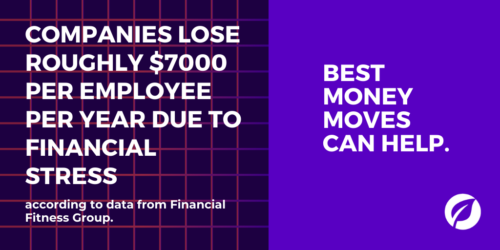
According to Financial Fitness Group, companies lose roughly $7,000 per employee per year due to stress caused by personal finance issues. And for employees, the effects of stress go far beyond dollars and cents. Long-term financial stress can take a huge toll on overall employee wellness and can even lead to emotional and physical consequences. 

Here are 4 ways that financial stress impacts overall employee wellness.

cost of financial stress

1. Financial stress can keep your employees up at night.

A good night’s sleep is important for both physical and mental health. A full night’s sleep has been linked to boosting the immune system, brightening mood, improving memory and even increasing day-to-day productivity. Unfortunately, those who are financially stressed are among the worst sleepers in America, according to the Better Sleep Council’s State of America’s Sleep survey.

Without healthy sleeping habits, an employee is more likely to experience mental strain, anxiety and depression, along with physical symptoms such as a weakened immune system. And those effects can spill over into the workday. According to the sleep foundation, sleep-deprived employees take more time to react in critical situations and are more likely to make mistakes than their well-rested counterparts. Reducing the financial stress that’s keeping your employees up at night is one step toward helping them rest easier.

2. Prolonged stress upsets employee work/life balance.

Proper work/life balance has already become a challenge following the COVID-19 pandemic, with millions of employees transitioning out of the office and into remote work. 

Burnout is a rising concern associated with stressed employees. Job burnout is a specific type of work-related stress that causes physical/emotional fatigue. Employees who suffer from significant levels of burnout can suffer from insomnia and increased stress levels and are more likely to take sick leave or look for another job. 

Employers can help their employees avoid burnout by creating a healthy workplace culture, allowing employees to work on a flexible schedule, and providing resources to address mental health concerns. Burnout remains a rampant problem in the workplace as, according to Deloitte, 77% of professionals have felt burnout at their current job.

3. Financial stress is a physical problem too.

Stress not only raises anxiety levels, but it can also take a physical toll on the body, causing high blood pressure, headaches, fatigue, pains and aches among other things. 

If the problem persists, stressed employees are more likely to get cardiovascular disease and other ailments that wind up killing around 120,000 people per year. Reducing that kind of stress in the workplace can avoid a cycle of various stressors that poor financial habits can cause.

4. Stress could be harming your workplace culture.

According to the Mayo Clinic, some of the most common effects of stress include increased irritability or anger. Employees burdened by stress are nine times more likely to have troubled relationships with coworkers and twice as likely to be searching for a new job.

It’s vital to address employee stress to foster a positive workplace culture  — one that allows employees to ask for personal finance assistance when they need it. One solution is to offer your team a financial wellness program. Providing employees with comprehensive financial wellness tools can help them address their financial stress head-on Plus, it signals to your employees that you care about their overall wellbeing.

Offer your employees relief from financial stress with Best Money Moves.

Less than 33% of workers have access to benefits that can assist with their financial needs according to a Financial Health Network survey. 

By offering financial wellness programs, like Best Money Moves, employers can help employees manage their personal finance goals and stress. 

Best Money Moves is a mobile-first platform that offers personalized financial planning and coaching resources, focused on solving your employees’ pain points. The program uses artificial intelligence, along with a human-centered design, to measure employee financial stress and then dial it down with personalized solutions. Our triggers and alerts system — as well as budgeting tools, personal finance resources and more — help guide employees to make more informed financial decisions and reduce their overall stress.

To learn more about Best Money Moves Financial Wellness Platform, let’s schedule a call. Contact us and we’ll reach out to you soon.

Top 5 Financial Wellness Program Features for 2022

Top 5 Financial Wellness Program Features for 2022

Financial Wellness programs are the must-have benefit for 2022. Make sure your financial wellness plan includes these 5 top program features. 

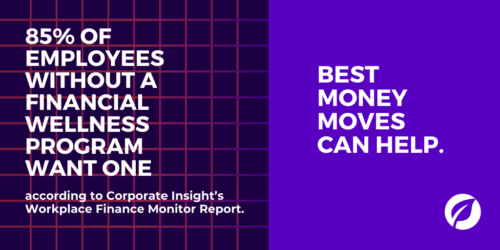
Financial wellness is 2022’s must-have employee benefit. According to Corporate Insight’s Workplace Finance Monitor Report, 85% of employees without a financial wellness program want one. 

However, not all financial wellness programs are created equal. The most successful programs include features tailored to the employees that use them.

Here are 5 top program features for your 2022 financial wellness platform.

1. Look for financial wellness programs that utilize a holistic approach to money.

Each one of your employees has to navigate their financial health ⸺ that’s one of the top appeals of offering financial wellness benefits. However the money management needs of a veteran employee about to retire are going to look very different than those of a recent grad dealing with credit card debt.

So, financial wellness programs are most useful to employees if they can encompass all facets of financial health. From paying down immediate debt to reaching long-term goals, an all-encompassing program will grow with your employees and offer something for those at any stage. Best Money Moves offers solutions for users from any financial background. Whether it’s basic budgeting, complex debt repayment, funding an education or planning for the future, the platform offers something that all employees can use.

2. Give your employees professional, personalized advice.

While it’s important for financial wellness platforms to cover the financial spectrum, an effective program will also include specialty features that pertain to each employee’s unique situation. Offering specialized, professional advice can also help engage demographics otherwise less likely to use financial benefits. Female participants and those with lower household income are less likely to enroll in financial wellness programs and are more likely to reach out to a friend for financial advice. Best Money Moves takes in user data to highlight stress points and uses them to suggest resources. The platform helps employees connect to other, personalized services from our comprehensive list of verified partners.

3. Consider platforms with actionable resources.

The Workplace Monitor Report also found that, among employees who had access to financial wellness programs, financial goal tracking and budgeting resources were amongst the highest rated features. The Best Money Moves Budget tool is a detailed feature that allows users to input their income, expenses and savings to give a comprehensive breakdown of how to spend your money. Users enter information about how they currently allocate their budget and Best Money Moves helps highlight areas of success and concern. The platform also includes intuitive calculators and a savings and debt tracker that allow employees to monitor long-term financial progress. Best Money Moves also offers unique user Journeys that take employees step-by-step through large financial decisions such as buying a home or a car.

4. Engage your employees with easy to use platforms.

For your employees to get what they need out of a financial wellness program, those programs need to be easy-to-use. That’s why Best Money Moves focuses on providing financial education for employees of all experience levels. Users of any financial experience  can find what they need in a library of over 800 articles, videos and webinars. Even a 10-minute session on the site on desktop or mobile can get users started on their financial journey.

5. Find financial wellness programs that keep track of your team’s progress.

An integral part of effective financial wellness programs involve showing employees the progress they’ve made on their personal finance goals. Keeping these goals in mind allows employees to find long-term solutions to their problems, instead of quick fixes. Best Money Moves provides several features that help users track their financial journey over the course of months, or even years. Plus, Best Money Moves is designed to provide employers with anonymous feedback about which financial challenges their employees are struggling with most. In this way, employers can offer other benefits and solutions targeted to their team’s unique pain points.

To learn more about Best Money Moves Financial Wellness Platform, let’s schedule a call. Contact us and we’ll reach out to you soon.