
What is Employee Financial Wellness?

What is Employee Financial Wellness?

What is employee financial wellness? With financial stress on the rise among employees, what can employers offer to help? Here’s what to know about employee financial wellness benefits. 

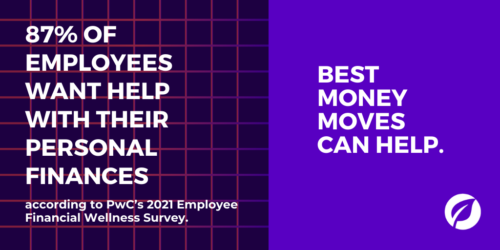
Sixty-three percent of employees feel their financial stress has increased since the start of the COVID-19 pandemic, according to PwC’s 2021 Employee Financial Wellness Survey. Now they want their employers to step in: The same survey found that 87 percent of participants want help with their personal finances.

As reducing financial stress becomes a top priority for employees, financial wellness benefits may be the key to retaining top talent.
What is employee financial wellness?

An employee’s financial situation impacts more than their wallet. Employee financial wellness refers to the way personal finances tie in to overall physical, emotional and mental health. Financial stability is an important component of overall employee wellness.

How does financial stress impact employees?

Long-term financial stress can impact a person’s overall wellbeing. Employees with elevated levels of financial stress are four times as likely to experience a decrease in overall household income, and struggle with meeting monthly household expenses.

These stressors can carry over into the workplace. Concerns about being able to manage finances and pay bills have naturally impacted employee performance, leaving many stressed and distracted. Other research studies echo the same sentiment of financial stress impacting employee lives and productivity. In a survey conducted by the Society of Human Resource Professionals (SHRM), 37% of employed adults agreed or strongly agreed that they had to miss work because of a financial emergency in the past 12 months.

Without employer support, financial stress can also become a retention issue. Of those surveyed in PwC’s Employee Financial Wellness Survey, 72% said they would be attracted to a different organization that cared more about their financial wellbeing. o keep the most productive and talented employees and show that the organization cares about their staff, employers will need to strengthen their financial wellness programs.

How can employee financial wellness programs reduce employee stress?

Employee financial wellness programs are any benefits that can help employees more successfully manage their personal finances. Retirement savings and safety net insurance are the most common benefits offered by employers. However, employees are also voicing their need for additional wellness programs, such as consulting for wealth management, estate planning and investments; financial literacy training on the basics of budgeting, debt and credit management, and other personal finance topics; and emergency funds preparedness.

Fewer companies provide financial well-being programs such as coaching services about everything from the basics of budgeting to credit score monitoring. However, according to the surveyed HR professionals who come from organizations that do, these programs are now more crucial for employee financial well-being. Emergency funds, financial planning and financial coaching services have all been used more by employees since the start of the pandemic.

Offering financial wellness programs for your workers can result in reduced mental stress, which can potentially improve productivity and retention rates. Since employees find financial wellness support as a top priority from their employer, they may be less likely to seek work elsewhere if they already feel that their financial needs are being met.

Looking for an all-inclusive employee financial wellness plan? Try Best Money Moves.

If you’re looking for a first-in-class financial wellness solution, Best Money Moves could be the answer you need. Best Money Moves is a financial wellness program that provides all the guidance and support employees need to help them reduce their financial stress. It has tools and features that help employees measure their financial stress, budget for monthly expenses, pay down debt and plan for emergencies. 

Employees can talk to trained professional financial counselors and educate themselves about everything from investing to co-signing loans and buying their first homes with access to a library of over 700 articles, videos and calculators. 

Best Money Moves is also gamified, featuring a point-based rewards system where users earn points every time they log in, enter their information into their profile, work with their budgets, read articles and measure their stress. Each point translates into a chance to win a monthly contest.

Employers want a financial wellness program that is expansive, engaging and suited to meet each of their employee’s unique needs and they’ve found it in Best Money Moves.

To learn more about Best Money Moves Financial Wellness Platform, let’s schedule a call. Contact us and we’ll reach out to you soon.

Why Financial Wellness Is Important to Employees in 2021

Why Financial Wellness Is Important to Employees in 2021

Why financial wellness is important to employees in 2021. Why employees want financial wellness benefits and what they value most about their tools and features.

An astounding 86 percent of employees agree it’s important for employers to offer financial wellness programs, according to research by John Hancock.

The time employees spend distracted by their personal finances at work equates to over 47 hours in lost productivity per year. Nearly 20 percent of employees worry about personal finances at work every single day and roughly 60 percent worry about it at least once a week. Financial stress is top of mind for 64 percent of employees.

More than 65 percent of employees believe that employer-sponsored financial wellness programs have an impact on reducing financial stress, 59 percent say such programs improve loyalty and the likelihood they’d recommend their employer and 54 percent say a financial wellness program would increase their job productivity.

All financial wellness programs are not created equally, however, and employees are looking for a specific mix of tools and resources to help them manage their finances and reduce financial stress. 

Why Financial Wellness Is Important to Employees in 2021

The vast majority of employees agree it’s important for employers to offer financial wellness programs. Most employees don’t feel knowledgeable enough to determine their overall financial wellness and 62 percent would like their employer to help them. 

These are top sources of financial stress that employees believe financial wellness programs could help them with:

  • 80 percent of employees aren’t sure if they’re on track for retirement
  • 57 percent of employees worry about not having enough emergency savings to cover an unexpected expense
  • 23 percent of employees have student loan debt for themselves or others and 60 percent of them have a balance of $20,000 or more
  • 20 percent of employees believe their debt is a major problem

Employees are most interested in financial wellness programs that can help them assess their situation, manage debt, balance financial priorities, set goals and create a budget. More than half of workers believe if they were taught how to balance their financial priorities, they would be able to save more for retirement.

How Best Money Moves Can Help

Best Money Moves has it all. It has tools and features that help employees assess their financial situations, budget for monthly expenses, pay down debt, plan for emergencies and save for retirement. Our team of Money Coaches, trained professional financial counselors, are ready to give employees financial guidance whenever they need it. Employees can educate themselves about everything from investing in the stock market to co-signing loans to buying their first homes with access to a growing library of over 700 articles, videos and calculators. We leverage user analytics to create individualized employee content and Best Money Moves is gamified to encourage consistent engagement. 

Employee information is always private but employers do have access to key analytics that show overall employee financial stress and stress levels over time. The Employer Dashboard also features information on program usage, debt and savings levels and more so employers can see just how valuable Best Money Moves is to their employees.

If you want to learn more about how Best Money Moves can bring financial wellness to your company download our whitepapers and sign up for a demonstration here.

More on Topics Related to Why Financial Wellness Is Important to Employees in 2021

What to Look for in a Financial Wellness Program

How to Choose Your Benefits Package for 2021

Why Financial Wellness Is a Must-Have Employee Benefit

How Financial Stress Impacts Job Performance

HR Trends 2021: Which Benefits Do Employees Value Most?

How Employee Health and Wellness Programs Help Build Resiliency

How Employee Health and Wellness Programs Help Build Resiliency

How employee health and wellness programs help build resiliency on an individual and organizational level to better navigate economic uncertainty.

An astounding 75 percent of U.S. employees are struggling at work because of anxiety caused by COVID-19 and other recent events, according to a survey by TELUS International.

Employers aren’t blind to the unprecedented levels of stress employees are feeling. In fact, as the pandemic drags on, 85 percent of them are increasingly concerned about their employees’ health and wellness needs, according to research by Unum.

Another report by Principal found roughly 30 percent of employers plan to adapt benefits offerings to provide better mental health and wellness programs, childcare support, healthcare benefits and financial wellness programs to support employees through times of uncertainty.

“COVID-19 has fundamentally reshaped the benefits landscape,” says Kara Hoogensen, senior vice president of U.S. Insurance Solutions for Principal. “Employees and employers alike are recognizing the need for coverage that protects the health and well-being of both individuals and their families. This has brought new meaning to benefits that may have previously fallen lower on an employee’s priority list, such as income protection, life insurance and mental health programs.”

How Employee Health and Wellness Programs Build Resiliency

According to the research by TELUS International, since working from home during the pandemic, almost four in five employees have found it challenging to “shut off” from work in the evenings. Forty percent of workers aren’t getting enough sleep and 13 percent are hardly sleeping at all. Over 35 percent of employees reported feeling less healthy physically and 45 percent said they feel less healthy mentally. But just 40 percent of employees feel empowered to let someone at their company know when they aren’t feeling physically or mentally well, and that’s a problem. 

Employees who aren’t feeling well struggle to focus, aren’t as engaged or collaborative, take more time off and are less satisfied with their jobs, ultimately taking a toll on an organization’s productivity and retention. Nearly 80 percent of employees would consider quitting their current position for a job that focused more on employee mental health. 

Flexible Schedules Build Resiliency and Better Health Outcomes

Nearly 90 percent of employees agreed having more flexibility in their work schedule would positively impact their health, 49 percent said health care benefits that include therapy and counseling would make a difference, 43 percent would like thoughtful one on one check-ins from their employer and 37 percent thought virtual workshops about health and wellness or yoga and meditation classes would make them feel like their mental health is being prioritized.

Prioritizing Employee Health and Wellness is a Win-Win

Prioritizing employee health and wellness is mutually beneficial. Through health and wellness programs employees have the opportunity to improve their physical, mental and financial health, lower their stress levels and learn how to better manage the various struggles they may face in the future. This absolutely carries over to their performance at work. The result is a company culture that is healthier, more supportive and more resilient to challenges on all fronts.

More on Topics Related to Health and Wellness Programs at Work

Top 10 Employee Benefits for 2021

Why Financial Wellness Is a Must-Have Employee Benefit

Building Your COVID-19 Return to Work Safety Plan

Support Workers with Better Employee Benefits

Coronavirus 2020: Effectively Working from Home

Why Financial Wellness Is a Must-Have Employee Benefit

Why Financial Wellness Is a Must-Have Employee Benefit

Why financial wellness is a must-have employee benefit. The demand for financial wellness programs has never been higher and employers are ready to help.

Employers are getting serious about financial wellness.

Financial wellness programs have emerged as a key employee benefit in the last few years and COVID-19 has only strengthened demand for resources that can help employees deal with their finances.

More than 60 percent of employers now feel “extremely” responsible for their employees’ financial wellness, compared to just 13 percent in 2013, according to the latest Workplace Benefits Report from Bank of America. Employers are most interested in programs that help employees save for retirement (81 percent), plan for healthcare costs (71 percent), budget (63 percent), save for college (55 percent) and manage debt (54 percent). Over 80 percent of employers agree that financial wellness programs and tools help to create more productive, loyal, satisfied and engaged employees.

Heightened interest in financial wellness programs couldn’t come at a better time as 59 percent of employees say they don’t have control over their debt and 62 percent say they don’t have enough emergency savings to last them six months.

Why Financial Wellness Is a Must-Have Employee Benefit

The issue of financial wellness is multifaceted. While most employees experience some form of financial stress, each situation is unique. 

When it comes to debt, for instance, 82 percent of employees are in it, but the type of debt they have varies. According to the Bank of America Survey, half of employees have credit card debt, 46 percent have a mortgage loan and 21 percent have student loan debt. Regardless of the type of debt, 36 percent say it affects their ability to achieve their financial goals.

It’s mentioned earlier in this post that 62 percent of employees don’t have enough emergency savings to last six months, but that’s not the full story. Nearly half of employees say their emergency savings won’t last more than three months and 24 percent admit it won’t last them even one month, according to research by FlexJobs and Prudential.

As far as retirement, 71 percent of employees expect the pandemic to impact their plans, according to research by TD Ameritrade. Almost 40 percent have delayed or are considering delaying their retirement, 36 percent have decreased or are considering decreasing their retirement savings and 29 percent have withdrawn or are considering withdrawing funds from their 401(k) account. On the flip side, 47 percent of employees have increased or are considering increasing their retirement savings contributions, 29 percent of employees have opened or are considering opening a new investment account and 27 percent have converted or are considering converting their IRA to a Roth IRA.

Employees may have different financial stressors and goals, but 84 percent of them are in agreement that COVID-19 will have an impact on their ability to achieve long-term financial security and 59 percent of them say that impact will be moderate or severe. 

What Employees Want From Financial Wellness Programs

Bank of America asked employees which financial resource would be most important to them if their employer were to offer it and found:

  • 41 percent of employees want financial advice from a professional
  • 30 percent want information on retirement plans
  • 28 percent want the availability of financial products/services that help employees
  • 27 percent want online financial tools or calculators
  • 26 percent want resources on developing financial skills and good financial habits

They also noted that employees reacted positively to other forms of help, including tips for preparing for a financial shock, receiving a report card that can help them measure their financial health and even support to help them plan and take action.

How Best Money Moves Can Help

Best Money Moves has it all. It has the tools and features that help employees measure their financial stress, budget for monthly expenses, pay down debt and plan for emergencies. Our team of Money Coaches, trained professional financial counselors, are ready to give employees financial guidance whenever they need it. Employees can educate themselves about everything from investing in the stock market to co-signing loans to buying their first homes with access to a library of over 700 articles, videos and calculators. We leverage user analytics to create individualized employee content and Best Money Moves is gamified to encourage consistent engagement. 

Employee information is always private but employers do have access to key analytics that show overall employee financial stress and stress levels over time. The Employer Dashboard also features information on program usage, debt and savings levels and more so employers can see just how valuable Best Money Moves is to their employees.

If you want to learn more about how Best Money Moves can bring financial wellness to your company download our whitepapers and sign up for a demonstration here.

More on Topics Related to Why Financial Wellness Is a Must-Have Employee Benefit

What to Look for in a Financial Wellness Program

How to Choose Your Benefits Package for 2021

Employee Financial Wellness During the COVID-19 Pandemic

How Financial Stress Impacts Job Performance

HR Trends 2021: Which Benefits Do Employees Value Most?

Employee Financial Wellness During the COVID-19 Pandemic

Employee Financial Wellness During the COVID-19 Pandemic

Financial wellness during the COVID-19 pandemic. How COVID-19 is impacting financial stress, and how financial wellness programs can help.

The vast majority of U.S. employees – 84% – expect the COVID-19 pandemic to impact their long-term financial wellness, according to a new study from Northwestern Mutual. The annual Planning and Progress study also found that while the pandemic is financially distressing, it actually inspires resiliency and some positive behavioral change. 

Higher levels of employee financial stress are linked with lower productivity and poor financial decisions, creating a negative feedback loop. This new study showed that some employees are taking a different approach. “People appear to be cautiously optimistic about the future and a growing number are taking responsibility and action, which are key ingredients for financial planning,” said Christian Mitchell, executive vice president and chief customer officer at Northwestern Mutual. 

Financial Stress Statistics During COVID-19

The most substantial result of the study is an increase in financial stress. A hefty 38 percent of participants took undesirable steps to make ends meet in the short-run. Some of those steps included:

  • 26 percent of participants took advantage of payment deferral options
  • 19 percent of participants pulled from their personal savings or emergency funds
  • 13 percent of participants borrowed from a family member or friend

As a result of the tangible damages of the COVID-19 pandemic, workers expressed a declining sense of financial wellness. Nearly 60 percent of employees believe the financial impact of COVID-19 will be moderate or high. Just 35 percent of participants rated themselves as financially secure. That is a drop of 10 percentage points from the pre-pandemic statistic. On the other side of the spectrum, 19 percent of participants rated themselves as not financially secure, a seven percentage point jump from the 12 percent statistic prior to COVID-19. 

Increased Demand for Financial Wellness Due to COVID-19

For many employees, COVID-19 has illuminated areas of financial stress that they would like to alleviate. More so than before the pandemic, workers are trying to meet the challenges of this economic downturn and striving for financial wellness. Fifteen percent of participants said they did not have a financial plan before the pandemic, but now created plans and 20 percent of participants said they made significant adjustments to the plans they had before the pandemic. 

The pandemic also inspired a significant uptick in the number of Americans looking for financial guidance: 19 percent of Gen X, 22 percent of Millenials and 22 percent of Gen Z said they did not previously have financial advisors but are now in the market for them. As these younger generations continue to enter the workforce, their demand for financial health benefits continues to increase. It is an opportune time for employers to supply financial wellness programs. 

While 84 percent of Americans COVID-19 to have a negative impact on their financial wellness, a similarly large 83 percent of Americans believe they’ll achieve long term financial security. 

How Financial Wellness Programs Can Help

Now more than ever, the importance and desire for financial wellness is evident. Platforms like Best Money Moves have the support system employees are seeking. 

Best Money Moves is more than a calculator and a budgeting tool. It is a user experience. We leverage user analytics to create individualized employee content and gamify the platform to encourage consistent engagement. When employees need a helping hand, our team of money coaches is always at the ready. And, of course, employee information is always private. 

If you want to learn more about how Best Money Moves can bring financial wellness to your company download our whitepapers and sign up for a demonstration here.

More on Topics Related to Employee Financial Wellness During COVID-19

What to Look for in a Financial Wellness Program

COVID-19 Retirement Impact: Early Withdrawals and Reduced Contributions

How to Choose Your Benefits Package for 2021

Reducing Employee Burnout During the COVID-19 Pandemic

How Financial Stress Impacts Job Performance